Teaching children about Ramadan doesn’t have to feel like a formal lesson. In fact, the best learning often happens through quizzes, simple questions, and everyday words they can recognize and use.
This page is designed as a parent-friendly hub that supports our main guide on Ramadan for children. If you’re looking for a complete introduction first, you may want to start with our main pillar page on Ramadan for Kids and then come back here for practice and reinforcement.
Below, you’ll find age-appropriate quizzes, common questions kids ask, essential Ramadan vocabulary, and fun riddles—perfect for home, classrooms, or online learning.
Ramadan Quiz for Kids (With Answers)
Quizzes help children remember what they’ve learned without pressure. Think of them as “knowledge games,” not tests.
For a full interactive set, visit our dedicated Ramadan quiz for kids page.
Sample Ramadan Quiz Questions
- What month do Muslims fast in?
Answer: Ramadan - What is fasting called in Islam?
Answer: Sawm - What meal do Muslims eat before Fajr?
Answer: Suhoor - What meal breaks the fast at sunset?
Answer: Iftar - Why do Muslims fast in Ramadan?
Answer: To obey Allah, grow self-control, and remember those in need
Parents tip: After each answer, ask “Why do you think this is important?” This turns memorization into understanding.
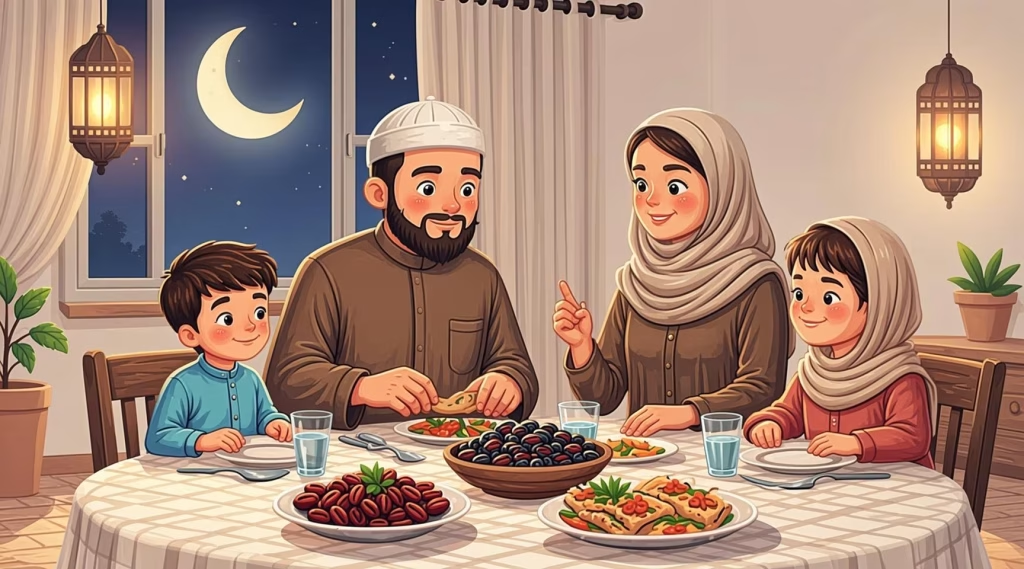
Common Questions About Ramadan for Kids
Children are naturally curious, and their questions are often simple but deep. Answering them clearly builds trust and confidence.
You can explore more child-friendly explanations on our questions and answers about Ramadan page.
Why Do Muslims Fast in Ramadan?
Muslims fast to obey Allah’s command and to learn patience, gratitude, and kindness. Ramadan is about the heart, not just staying hungry.
Do All Children Have to Fast?
No. Children are not required to fast until they reach puberty. Many kids practice by fasting for a few hours, which is encouraged gently, never forced.
Can You Drink Water While Fasting?
No. From Fajr until Maghrib, Muslims do not eat or drink. This helps build self-control and discipline.
What Happens If Someone Forgets and Eats?
If someone forgets and eats or drinks while fasting, the fast is still valid. This shows Allah’s mercy.

Ramadan Vocabulary for Kids (Simple Meanings)
Learning the right words helps children talk confidently about their faith.
You can find a printable and expanded version on our Ramadan vocabulary for kids page.
Essential Ramadan Words
- Ramadan – The ninth month of the Islamic calendar
- Sawm – Fasting
- Suhoor – Pre-dawn meal
- Iftar – Meal to break the fast
- Fajr – Morning prayer
- Maghrib – Sunset prayer
- Qur’an – The holy book of Islam
- Laylat al-Qadr – The Night of Power
- Zakat – Charity given to help others
Parent idea: Ask your child to use one new word each day in a sentence.
Fun Ramadan Riddles for Kids
Riddles make learning memorable and fun, especially for younger children.
For more playful learning, visit our Ramadan riddles for kids collection.
Easy Ramadan Riddles
- I come once a year, and Muslims wait for me. What am I?
Answer: Ramadan - You eat me before sunrise to help you fast. What am I?
Answer: Suhoor - I am read more in Ramadan than any other month. What am I?
Answer: The Qur’an
Frequently Asked Questions (FAQ)
What is the best age to teach kids about Ramadan?
Children can start learning basic ideas as early as age 4 or 5, using stories, vocabulary, and short activities.
How can I make Ramadan learning fun at home?
Use quizzes, riddles, daily goals, and simple discussions after iftar. Keep it positive and pressure-free.
Should kids memorize definitions or understand meanings?
Understanding always comes first. Memorization becomes easier once the meaning is clear.
Are quizzes good for Islamic learning?
Yes, when used gently. Quizzes help reinforce knowledge without making children feel judged or stressed.
Final Thought for Parents
Ramadan is a powerful teaching opportunity—not just about fasting, but about values, habits, and identity. Quizzes, questions, and vocabulary help children connect with the month in a way they enjoy and remember.
Parents who want guided learning may find structured classes helpful, especially when lessons are age-appropriate and rooted in authentic Islamic teaching.