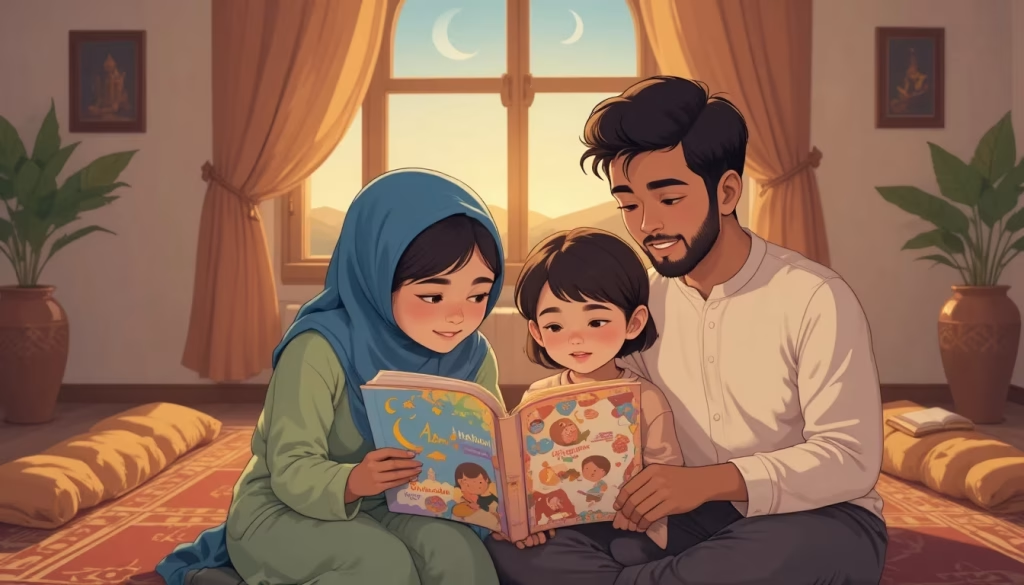
Ramadan is a special month for Muslim families.
For children, it’s often their first real connection with fasting, prayer, kindness, and self-control.
This guide is written for parents who want a clear, gentle, and trustworthy explanation of Ramadan for kids, without overwhelming them. Think of it as a warm conversation, not a lecture.
Introduction of Ramadan for Kids
Before rules and routines, children need meaning.
Ramadan is the ninth month of the Islamic calendar. It’s the month when Allah revealed the Quran to Prophet Muhammad ﷺ. Muslims all over the world slow down, become more mindful, and try to be better people.
For kids, Ramadan is about:
- Learning gratitude
- Practicing patience
- Feeling close to Allah
- Being kind to others
It’s not about being perfect. It’s about trying.
What Is Ramadan? (Explained for Kids)
Ramadan is a month when Muslims fast from dawn (Fajr) until sunset (Maghrib).
Fasting means:
- No food
- No drinks
- No bad behavior
But here’s the key thing kids should understand:
“Fasting is not just about the stomach. It’s about the heart and manners too.”
Allah says in the Quran:
يَا أَيُّهَا الَّذِينَ آمَنُوا كُتِبَ عَلَيْكُمُ الصِّيَامُ
“O you who believe, fasting has been prescribed for you…” (Quran 2:183)
In simple words:
Allah gave fasting as a gift to help us grow.
For a deeper, age-appropriate explanation, parents often find this helpful: Explaining Ramadan to Kids.
Understanding Ramadan for Kids
Children don’t need long explanations. They need relatable ones.
You can explain Ramadan like this:
- It’s a training month for good habits
- Like a gym for the heart
- Or practice mode for being kind and patient
Kids also learn that:
- Young children are not required to fast
- Allah loves effort, not hardship
- Even small good deeds count
The Prophet ﷺ said:
“Actions are judged by intentions.”
Bukhari & Muslim
That’s comforting—for adults and kids alike.
Why Ramadan Is Important for Muslim Kids
The importance of Ramadan for kids isn’t about hunger.
It’s about identity and values.
Ramadan helps kids:
- Feel proud of being Muslim
- Learn self-control
- Understand empathy for the poor
- Build a connection with the Quran
When kids see parents praying, giving charity, and speaking gently, Ramadan becomes lived Islam, not just taught Islam.
For more faith-based context, see Ramadan History, Hadith & Etiquette for Kids.
How Kids Can Take Part in Ramadan
Kids don’t need to fast all day to be part of Ramadan.
Here are healthy, age-appropriate ways children can participate:
- Partial Fasting
- Fasting for 1–3 hours
- Or skipping snacks instead of meals
- Prayer Participation
- Praying Maghrib together
- Standing quietly during Taraweeh
- Making simple duas
- Good Deed Challenges
- Helping parents
- Sharing toys
- Speaking kindly
This makes Ramadan for Muslim kids positive, not stressful.
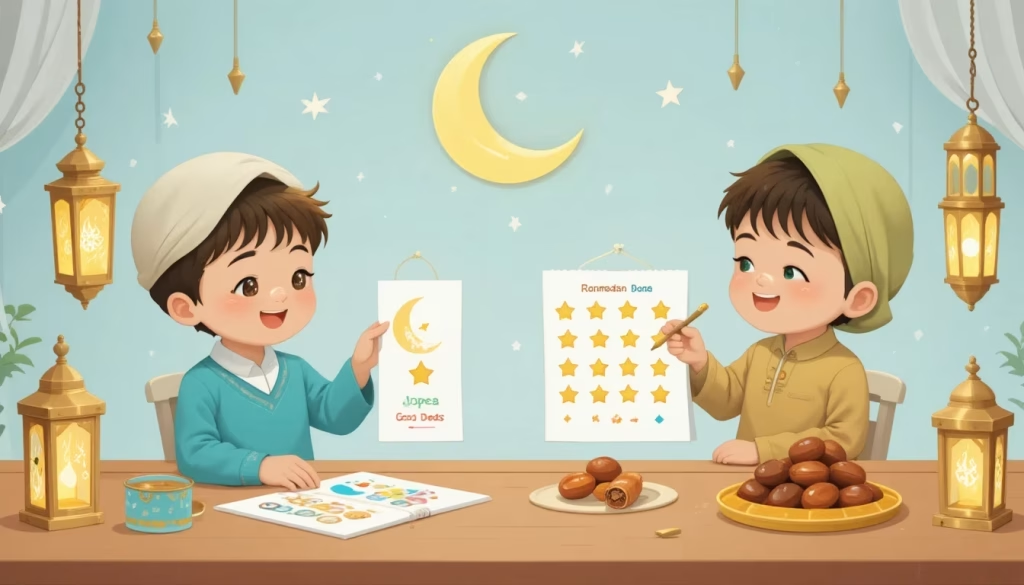
Ramadan Activities Kids Can Do
Kids learn best when learning feels like play.
Popular Ramadan activities include:
- Ramadan good deed charts
- Moon sighting crafts
- Coloring Islamic stories
- Simple charity jars
These activities help kids associate Ramadan with joy and purpose.
You’ll find structured ideas here: Ramadan Activities for Kids.
Stories and Lessons Related to Ramadan
Stories stick. Lectures don’t.
Short Ramadan stories teach big lessons:
- A child sharing iftar with a neighbor
- A family giving secretly to charity
- A child learning patience while fasting
The Prophet ﷺ was known for his kindness, especially in Ramadan.
Al Bukhari and Muslim
Aisha (RA) said he was “more generous than the blowing wind” during this month.
For child-friendly storytelling, explore Ramadan Stories, Poems & Nasheeds for Kids.
Simple Facts About Ramadan for Kids
Here are easy, memorable facts children love:
- Ramadan lasts 29 or 30 days
- Muslims fast from dawn to sunset
- The fast ends with iftar
- Eid comes after Ramadan
- The Quran was revealed in Ramadan
These bite-sized facts are perfect for young minds.
You can expand on them using Ramadan Facts for Kids.
Learning Through Games and Quizzes
Kids remember what they interact with.
Quizzes, word games, and simple vocabulary:
- Reinforce learning
- Build confidence
- Make Islamic learning fun
Many parents use Ramadan Quizzes & Vocabulary for Kids as a light daily activity after iftar.
A Gentle Note for Parents
Every child is different.
Some will be excited.
Some will struggle.
Some will just watch quietly.
That’s okay.
If you’d like your child to learn about Ramadan in a structured, engaging, and age-appropriate way, guided by caring teachers, there are gentle online Quran learning programs designed especially for young hearts and growing minds.
FAQs About Ramadan for Kids
Q. What is Ramadan in simple words for kids?
Ramadan is a special month when Muslims try to be better by fasting, praying, and being kind. It helps kids learn patience, gratitude, and love for Allah in simple, practical ways.
Q. Do kids have to fast in Ramadan?
No, children are not required to fast. Islam only requires fasting after puberty. Kids can practice small fasts if they want, but Allah does not want children to feel sick or forced.
Q. Why do Muslims fast in Ramadan?
Muslims fast to obey Allah, learn self-control, and feel empathy for people who don’t have enough food. Fasting also helps clean bad habits and strengthen good character.
Q. How can young kids participate in Ramadan?
Kids can join Ramadan by praying with family, helping at home, giving charity, listening to stories, and practicing kindness. Even smiling and sharing count as good deeds.
Q. What is iftar and suhoor for kids?
Suhoor is the meal eaten before dawn, and iftar is the meal eaten at sunset to break the fast. For kids, these meals are often family moments filled with duas and togetherness.
Q. What do kids learn from Ramadan?
Kids learn patience, self-control, gratitude, empathy, and love for Allah. Ramadan helps build Islamic identity and teaches values that stay with them beyond the month.
Q. How can parents explain Ramadan without pressure?
Parents can explain Ramadan as a learning month, not a test. Using stories, activities, and gentle encouragement helps children feel excited rather than stressed.
For more guided learning tools, worksheets, and child-friendly explanations, parents often explore Ramadan Resources for Kids to support their child’s Ramadan journey.